Nothing should spoil the excitement of preparing your trip to Namibia. On the other hand, you need to leave well prepared, and that’s why we’re here. Update on malaria and compulsory vaccinations for Namibia: we share with you all the health and practical information you need before your big departure.
What is malaria?
A simple definition
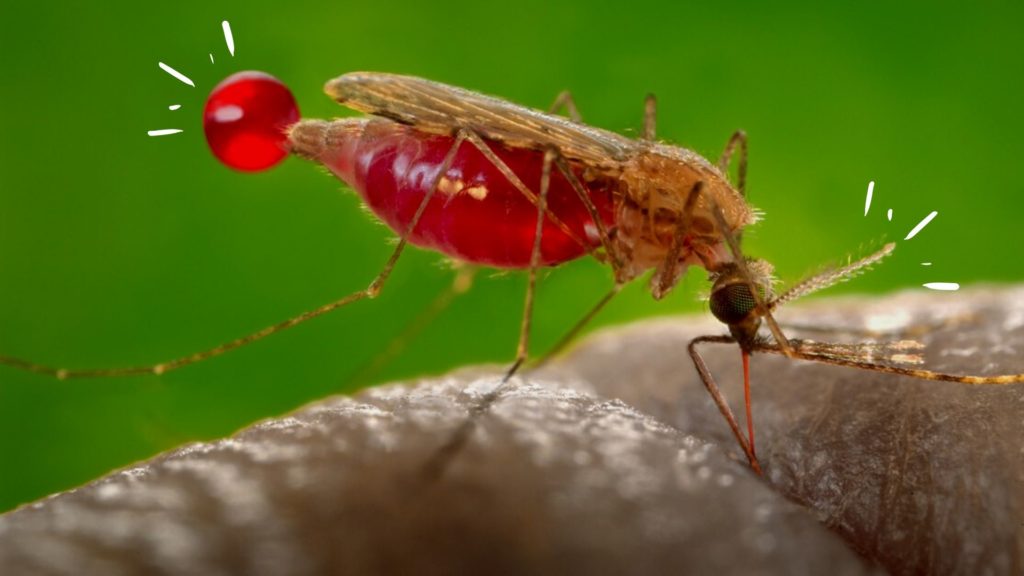
Malaria and malaria are two terms that mean the same thing. Malaria is a disease transmitted by the bite of certain species of mosquito known as “anopheles”.
Not all mosquitoes carry the disease, and getting bitten in a high-risk area does not necessarily mean transmission. Carrier mosquitoes bite most often at sunrise and sunset, so pay particular attention to these times of day and night.
Malaria symptoms
The symptoms of malaria are very similar to those of influenza. In the period following your trip, if you notice that you are suffering from a fever or persistent headache, don’t hesitate to consult your doctor, specifying the country you have been to.
Malaria symptoms appear two to three weeks after the bite of an infected mosquito. That’s why it’s important to keep a close eye on your health when you return from a high-risk destination.
Malaria in Namibia: how to avoid it?
Cover up!
Don’t tempt the mosquitoes, cover your arms and legs as soon as it gets dark, and use mosquito repellent if necessary.
Repellents in all formats
Mosquito repellent creams or sprays are available in all formats, including the smallest for those who don’t want to check their luggage in the hold.
Most lodges also provide mosquito repellents for your rooms and common areas. Finally, in the evening: sleep under a mosquito net whenever possible.
Preventive treatment
And don’t hesitate to contact your doctor if you wish to take preventive treatment. It is taken a week before your departure, during your stay and especially a week afterwards. Depending on the dosage, the indications differ: our expertise stops at that of science, and your SATravellers team invites you to contact your family doctor on this subject before your Namibian adventure.
Malaria zones in Namibia
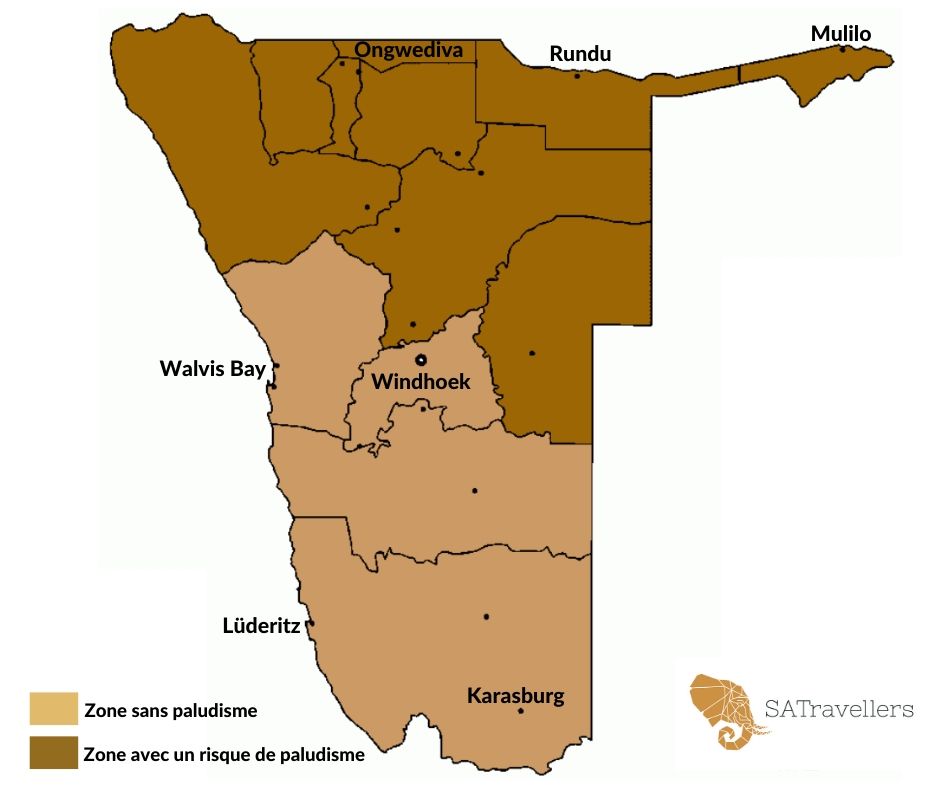
Malaria exists in Namibia, but only to a very limited extent and only in a few well-defined regions. The risk of malaria potentially concerns the entire northern third of the country, but it is in the far north and northeast that the risk is highest – in other words, the Ovambo region and the Zambezi region (the Caprivi strip).
A risk during the rainy season in the north of the country only
The risk is present only during the rainy season from January to April. And with good reason: mosquitoes love wet and marshy areas. The closer you get to Botswana and its superb Delta, the more likely you are to encounter mosquitoes along the way.
Etosha safari update
Here, opinions differ. Many claim that Etosha Park is malaria-free – including local guides and rangers. But some consider that the risk is not zero during the wettest period (from October to April). Winters (May to September) are very dry and seem to be risk-free.
In any case, if there is a risk, the chances of encountering an infected mosquito are very low in this part of Namibia. Our recommendations remain the same: protect yourself from bites by covering up at dawn and dusk, use repellents and consult your doctor for advice on preventive treatment before you travel.
Which vaccinations are required for Namibia?
As Namibia has a very dry climate from May to October-November, there are no diseases commonly found in Africa. So there are no special precautions to take, and no compulsory vaccinations. However, remember to check your “basic” vaccinations: tetanus, polio, hepatitis, etc.
What should you pack in your first-aid kit for Namibia?
Medicines and pharmaceutical products can be found in the towns. But don’t forget that Namibia is still mainly a desert country: sometimes you can go for days without seeing a cat! And it’s for its wide-open spaces that we go to this magical country… So remember to take a few essential products with you before you leave, such as :
The essentials
- Aspirin,
- Sun cream,
- Anti-burn cream (Biafine type),
- Disinfectant,
- Mosquito repellent,
- Plasters, bandages, etc.
Medical structures and insurance
Medical facilities are plentiful and doctors well trained. Medical and repatriation insurance is always a good idea.
What are the right reflexes?
After your trip to Namibia, and even if you have taken preventive treatment, malaria symptoms may appear a few days, weeks or even months after your return. If you have the slightest doubt, the best thing to do is visit your doctor.
You’re all set.
And that’s it! You now know everything you need to know about malaria precautions for your next trip to Namibia. We’d be delighted to organize it for you – just get in touch!
We know the destination inside out. Check out our Namibia travel blog for itinerary ideas and other travel tips. Psssst… but also a guide to safaris in Namibia!
See you soon,
Anaëlle.
SATravellers is a Cape Town-based agency that has been specializing in tailor-made destinations in Southern Africa for over 13 years. Our rangers will be delighted to advise you.
Our latest articles on Namibia :