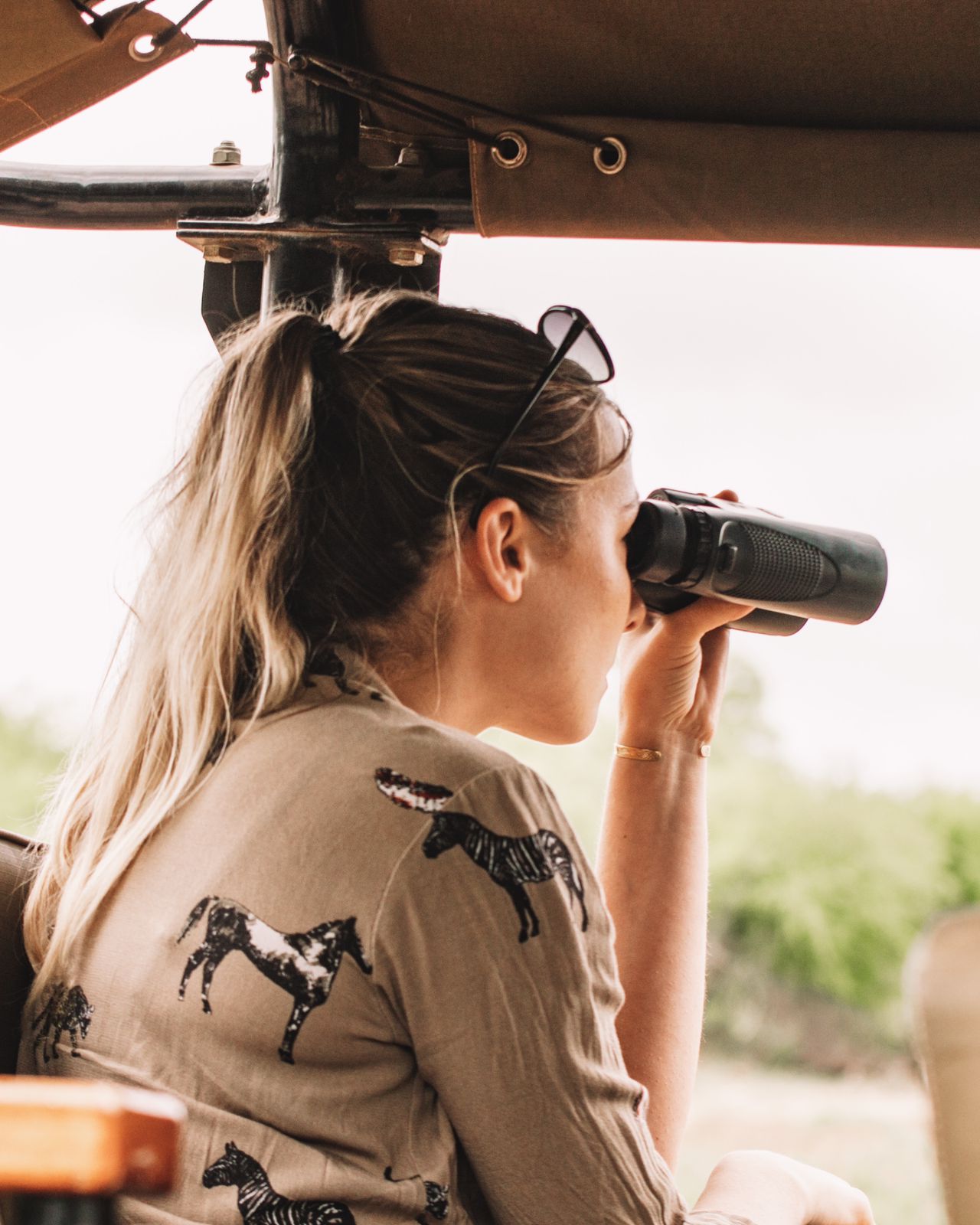
Mozambique naturally brings to mind the Indian Ocean, pale sandy beaches and the islands of Bazaruto. Yet far from the coast, the country reveals another face. One of vast plains, wetlands and wild territories where wildlife is gradually reclaiming its place.
Going on a safari in Mozambique means discovering a less expected Africa. Here, the experience is not only about searching for the Big Five. It also tells the story of returning wildlife, restored ecosystems and the work carried out in several protected areas.
Gorongosa is the most iconic example. Further south, Zinave and Maputo National Park offer other approaches.
The country also has a rare advantage: moving from savannah to the Indian Ocean in the same trip. A safari in Gorongosa, the beaches of Bazaruto or a safari in South Africa followed by a stay in Mozambique… several tours are possible.
In short
- Gorongosa is Mozambique’s iconic park for discovering wildlife and a remarkable ecosystem restoration project.
- Zinave became Mozambique’s first Big Five national park in 2022.
- Maputo National Park combines wild landscapes with proximity to the Indian Ocean.
- For a first safari focused on the Big Five, South Africa generally remains the better fit.
- Mozambique stands out above all for the chance to combine safari and beach in the same trip.
- The period from April to October is generally the most suitable for combining Gorongosa and the coast.
Would you like to include a safari in a wider trip to Mozambique? Discover our tailor-made trips to Mozambique and picture an itinerary combining safari, coast and experiences suited to your pace.
Can you go on safari in Mozambique?
Yes. Mozambique has several parks where you can watch wildlife. The experience is, however, different from what South Africa or Botswana offer.
There are fewer lodges and some itineraries require more preparation. That is also part of the appeal.
A safari in Mozambique suits travellers who want to explore lesser-known areas and take as much interest in their natural history as in the animals.
It therefore complements the other must-do experiences in Mozambique, between the Indian Ocean, culture and wild nature.
Where to go on safari in Mozambique?
Gorongosa, Zinave and Maputo National Park are three particularly interesting areas for a safari in Mozambique. Each one, however, has its own identity and does not offer the same experience.
Why choose Gorongosa for a safari in Mozambique?
Gorongosa is Mozambique’s iconic park for travellers who want to combine wildlife viewing with the discovery of a major ecological restoration project. Its history and the diversity of its ecosystems make it a stop like no other.
Located in the centre of the country, in Sofala province, Gorongosa has a unique history.
The Mozambican civil war had a profound impact on the park’s animal populations. Since 2008, the government of Mozambique and the Carr Foundation have been working together to restore it as part of the Gorongosa Project.
Animal populations have gradually recovered.
Elephants, lions, hippos, crocodiles, antelopes and wild dogs are now part of the park’s wildlife. Gorongosa also has a remarkable diversity of birds.
But Gorongosa should not be presented as a simple Big Five safari.
Its appeal is broader. Here you discover an ecosystem in the midst of restoration and a conservation story that is rarely so visible on a trip.
Why choose Zinave for a safari in Mozambique?
Zinave is particularly interesting for travellers looking for a more exclusive safari. In 2022, after the return of rhinos, it became Mozambique’s first Big Five national park.
Since 2015, the park has been the focus of a vast restoration and wildlife reintroduction programme.
More than 2,300 mammals of various species had been reintroduced by 2022. The return of black and white rhinos that same year made Zinave Mozambique’s first Big Five national park.
Lions, leopards, elephants, rhinos and buffalo are now present.
Zinave nevertheless remains far less developed for tourism than the large South African reserves.
It will better suit travellers looking for an exclusive experience who want conservation to play an important part in their itinerary.
Why go on safari in Maputo National Park?
Maputo National Park offers a different experience, between wildlife and coastal landscapes. Its location in southern Mozambique makes it easier to picture a trip that combines nature and the Indian Ocean.
Its environment mixes forests on sandy soils, wetlands, mangroves and vegetated dunes.
The elephant is one of the park’s flagship species. Zebras, giraffes, hippos, crocodiles, antelopes and many birds can also be found there.
Its proximity to the coast is particularly interesting.
Here, the contrast between land wildlife and the Indian Ocean feels almost natural. It is a good option for an itinerary that does not completely separate safari from a coastal stay.
Which animals can you see on a safari in Mozambique?
Mozambique is home to elephants, lions, hippos, crocodiles, antelopes, wild dogs and many bird species. Zinave is also home to the five species associated with the Big Five.
The country’s wildlife is much richer today than it was a few decades ago.
But as on any safari, no sighting is guaranteed.
Can you see the Big Five in Mozambique?
Yes. Zinave became Mozambique’s first Big Five national park in 2022, after the return of rhinos. The park is now home to lion, leopard, elephant, rhino and buffalo.
That does not mean Mozambique should be chosen solely to tick off these five species.
Animal densities, infrastructure and viewing conditions are not comparable with those of South Africa’s most renowned private reserves.
For a first safari in Africa driven mainly by the Big Five, South Africa is often the better fit.
Mozambique will appeal more to travellers looking for a different approach, with less visited areas and a strong conservation dimension.
Which animals can you see in Gorongosa?
Gorongosa lets you see a wide variety of species, including elephants, lions, hippos, crocodiles, antelopes and wild dogs. The park is also known for the richness of its birdlife.
Sightings vary with the seasons and the areas you explore.
That is also part of the charm of a safari: you never know exactly what you are going to see.
Why is Gorongosa a conservation success story?
Gorongosa is one of the most iconic examples of ecosystem restoration in Mozambique. The project combines biodiversity conservation, science, community development and tourism.
Gorongosa’s appeal therefore goes beyond watching animals.
Part of the work directly involves the communities living around the park.
This approach also changes the way you see a safari. You are not just discovering a wild area. You understand how a severely damaged park can gradually regain its biodiversity.
What is a safari in Gorongosa like?
A safari in Gorongosa is enjoyed without rushing, at the pace of the outings in the park and the conditions on the day. Depending on the season, several activities can complement the game drives.
What does a day on safari in Gorongosa look like?
A safari day in Gorongosa is generally organised around guided outings that explore the park’s different habitats. Some start early in the morning, when temperatures are cooler, while others take place later in the day.
There is, of course, no script.
An outing might feature elephants on the plains, hippos near the water or simply several hours spent watching the landscapes and the birds.
It is this element of the unexpected that makes a safari so compelling.
Which landscapes can you discover in Gorongosa?
Gorongosa offers a great diversity of landscapes, between wetlands, grasslands, forests and mountains. This mosaic of habitats partly explains the park’s biological richness.
It also illustrates the diversity of Mozambique’s landscapes, well beyond its coastline.
Where to stay for a safari in Gorongosa?
Choosing accommodation in Gorongosa depends as much on its location and the quality of the guiding as on its level of comfort. For an upmarket trip, the most sophisticated lodge is therefore not necessarily the one that will offer the best experience.
The activities on offer matter too.
In Gorongosa, luxury is also measured in available time.
A coffee before an early-morning outing. Back to the lodge when the heat rises. Out again a few hours later.
The pace should stay simple.
Safari in Mozambique or South Africa: which to choose?
Mozambique is better suited to travellers drawn to less visited areas and conservation projects. South Africa remains the better fit when a first safari or seeing the Big Five is the priority.
The two destinations do not offer the same experience.
They can, in fact, complement each other perfectly.
Why choose a safari in Mozambique?
Mozambique will appeal above all to travellers curious to discover areas still rarely associated with safari, and wildlife restoration projects. In this respect, Gorongosa has a particularly strong identity.
Zinave offers a more exclusive experience and now allows you to approach the Big Five from a different angle.
Why choose a safari in South Africa?
South Africa is particularly well suited to a first safari thanks to its wide choice of reserves, lodges and experiences. It also remains a preferred option when seeing the Big Five is a priority.
Kruger National Park and its neighbouring private reserves give access to a wide choice of lodges and a particularly polished safari experience.
Should you combine South Africa and Mozambique?
Yes. Combining South Africa and Mozambique lets you pair a very complete safari experience with a few days on the shores of the Indian Ocean.
South Africa lets you devote several days to safari. Mozambique then offers a complete change, with the landscapes of the Indian Ocean.
The trip changes pace without losing its coherence.
Which tour to choose to combine safari and beach in Mozambique?
A safari and beach trip in Mozambique can combine Gorongosa with Vilanculos, Bazaruto or Tofo. Another option is to go on safari in South Africa before heading to the Mozambican coast.
This safari and beach combination in Mozambique is one of the destination’s great strengths.
After the tracks and the early starts, a few days by the ocean let you slow down.
Which itinerary to choose between Gorongosa and Mozambique’s beaches?
Gorongosa can be combined with Vilanculos, Bazaruto or Tofo, depending on the atmosphere and activities you are looking for. The order of the stops then depends on the season, the transfers and the pace of the trip.
Vilanculos keeps a livelier atmosphere.
Bazaruto favours an island stay and switching off.
Tofo will appeal more to travellers who want to include diving and marine activities.
Can you combine a safari in South Africa with Mozambique’s beaches?
Yes. For a first trip to Southern Africa, combining a safari in South Africa with Mozambique’s beaches often strikes a very good balance.
Our trip combining a South African safari with Mozambique’s beaches starts in Cape Town and Franschhoek, then heads to Balule and Sabi Sand for several days of safari.
The holiday then ends in Vilanculos and on Bazaruto Island.
Discover this itinerary between savannah and Indian Ocean.
Bazaruto, Vilanculos or Tofo: where to go after a safari?
Bazaruto is better suited to a peaceful island stay, Vilanculos to those who want to keep more local life and Tofo to travellers drawn to diving and marine activities.
The right stop is therefore not necessarily the most spectacular beach. It is the one that matches the pace you are looking for after the safari.
Who is a safari and beach holiday in Mozambique for?
A trip combining safari and beach can suit a honeymoon, a family or a first discovery of Southern Africa. The stops and the pace simply need to be adapted to the travellers’ profile.
Why combine safari and beach for a honeymoon?
The contrast between safari and the Indian Ocean works particularly well for a honeymoon. The safari brings adventure and the first great emotions, while a beach stop then lets you slow down.
Bazaruto and Vilanculos fit particularly well into this type of itinerary.
Can you combine safari and beach in Mozambique as a family?
Yes. With children, it is best to limit the number of changes of accommodation and to plan a flexible enough pace.
You should also check the conditions for joining safaris and any age restrictions applied by each lodge or activity.
A beach stop then brings a freer pace.
Are safari and beach suited to a first trip to Southern Africa?
Yes. For a first discovery, combining South Africa with Mozambique is often one of the simplest and most balanced options.
South Africa offers a very complete safari experience. Mozambique then extends the trip by the Indian Ocean.
To picture the different possible combinations, you can discover our tailor-made trips to Mozambique.
When to go on safari in Mozambique?
The period you choose strongly influences the experience of a safari in Mozambique, particularly in Gorongosa. The dry season generally makes access to the park and travelling easier.
What is the best time for a safari in Gorongosa?
The dry season, from April to October, is the main period for discovering Gorongosa. May and June are particularly interesting, when the rains have largely stopped but the landscapes are still very green.
Gorongosa has a rainy season from November to March.
The park generally closes from mid-December to the end of March because of the wet season. After it reopens, some tracks may still remain temporarily inaccessible.
As the dry season progresses, conditions change.
The best period therefore depends on what you want to prioritise: green landscapes, wildlife viewing or birdwatching.
When to go to combine safari and beach in Mozambique?
The period between April and October generally offers the best fit for combining Gorongosa with the coast. It corresponds to the park’s dry season and makes travelling easier to plan.
The precise choice then depends on the beach destination and the activities planned.
How to organise a tailor-made safari in Mozambique?
A tailor-made safari in Mozambique should be built around how much room you want to give wildlife in your trip. A few nights in Gorongosa do not produce the same experience as an itinerary built around several protected areas.
You then need to take into account the season, the connections, the level of comfort and the destination chosen for the rest of the holiday.
How many nights should you plan for a safari in Mozambique?
There is no universal length, but a few nights are already enough to settle into the rhythm of safari and go on more outings. When Gorongosa is one of the main stops of the trip, it is best not to rush through it.
For a safari and beach itinerary, we generally favour fewer stops, with more time in each.
How to choose your safari lodge in Mozambique?
Star rating alone is not enough to choose a safari lodge. The quality of the guide, the location, the size of the property, the activities on offer and the logistics directly shape the experience.
In some regions of Mozambique, distances and connections need to be planned carefully.
The lodge’s commitment to conservation and local communities also deserves to be part of the choice.
What are our criteria for selecting safari lodges and partners?
We select lodges and partners according to their location, the quality of the guiding, comfort, the reliability of their organisation and how well they fit the pace of the trip. Practices relating to conservation and local communities are also part of our assessment.
On the ground, a property is about more than its star rating. Its location can have a direct impact on the time spent on safari and on how smoothly the days run.
We also look at the quality of the activities on offer, the teams’ ability to adapt the experience to the travellers’ profile and transfer constraints.
For a family trip, the conditions for welcoming children and any restrictions on activities are also taken into account.
Finally, we favour partners whose practices are consistent with protecting natural areas and respecting local communities.
The aim above all is to select the lodge and the experience that match the trip you are looking for.
Which safari to choose for a trip to Mozambique?
Gorongosa is the most obvious choice for discovering the story of the country’s ecological restoration. Zinave will appeal more to travellers drawn to an exclusive area, while Maputo National Park offers an interesting transition between wildlife and coast.
For a first safari, South Africa can also come before a few days on Mozambique’s beaches.
There is therefore no single way to build a safari in Mozambique.
Our travel designers select the parks, lodges and beach stops according to the season, your pace and your priorities.
Would you like to go from the savannah to the Indian Ocean? Talk to our travel designers to plan your tailor-made safari in Mozambique.
How was this guide put together?
This guide draws on South African Travellers’ knowledge of Southern Africa, first-hand experience of the destination and information from reference organisations and projects. These sources make it possible to test the travel experience against the data available on the parks, wildlife and conservation projects.
Our knowledge of the ground also lets us place the safari within the trip as a whole: season, transfer times, the pace of the stops, the choice of accommodation and a possible combination with the coast.
What are the reference sources?
The main sources used to document this guide are:
- Gorongosa National Park and the Gorongosa Project, for the park’s history, wildlife restoration and work on conservation, science and communities;
- ANAC (Administração Nacional das Áreas de Conservação), for information on Mozambique’s protected areas;
- Peace Parks Foundation, for the wildlife restoration and reintroduction programme in Zinave;
- official information from Mozambican parks and organisations on access periods, ecosystems and wildlife.
Combining these sources with our first-hand knowledge of itineraries in Southern Africa makes it possible to offer an account of safari in Mozambique that is both documented and realistic. It also lets us distinguish what can be planned (season, stops, accommodation) from what naturally remains unpredictable, such as wildlife sightings.