Mozambique is often associated with its beaches. Yet the country is far more than a long strip of sand facing the Indian Ocean.
Off Vilanculos, the Bazaruto islands blend dunes, sandbanks and turquoise water. Further south, Tofo opens straight onto the ocean. Inland, Gorongosa changes the scenery completely with its plains, wetlands and relief.
This diversity is what makes Mozambique’s landscapes so compelling.
A single trip can start on an island, continue in a national park and then return to the ocean a few days later. Rather than choosing between beach and nature, Mozambique invites you to combine several environments.
In short
- Bazaruto offers one of Mozambique’s most iconic landscapes, with islands, dunes and turquoise water.
- Vilanculos reveals another side of the coast, with its bay, its tides and its view of the archipelago.
- Tofo stands out for its long beaches that open straight onto the Indian Ocean.
- Ilha de Moçambique combines seascape, architecture and heritage.
- Gorongosa reveals a very different Mozambique, with plains, wetlands, forests and mountains.
- Combining the coast and the interior lets you discover the full diversity of the country’s landscapes.
Would you like to discover these landscapes on a tailor-made trip? Explore our itineraries in Mozambique and picture a holiday between islands, coast and wild nature.
What are the most beautiful landscapes in Mozambique?
There is no single typical Mozambican landscape. The country alternates between archipelagos, coastal dunes, mangroves, long beaches, plains, forests and mountain ranges.
Moving from one region to another can be spectacular.
This diversity is one of the must-do experiences in Mozambique. Above all, it lets you build a trip in which no two stops are alike.
Why does Bazaruto offer one of Mozambique’s iconic landscapes?
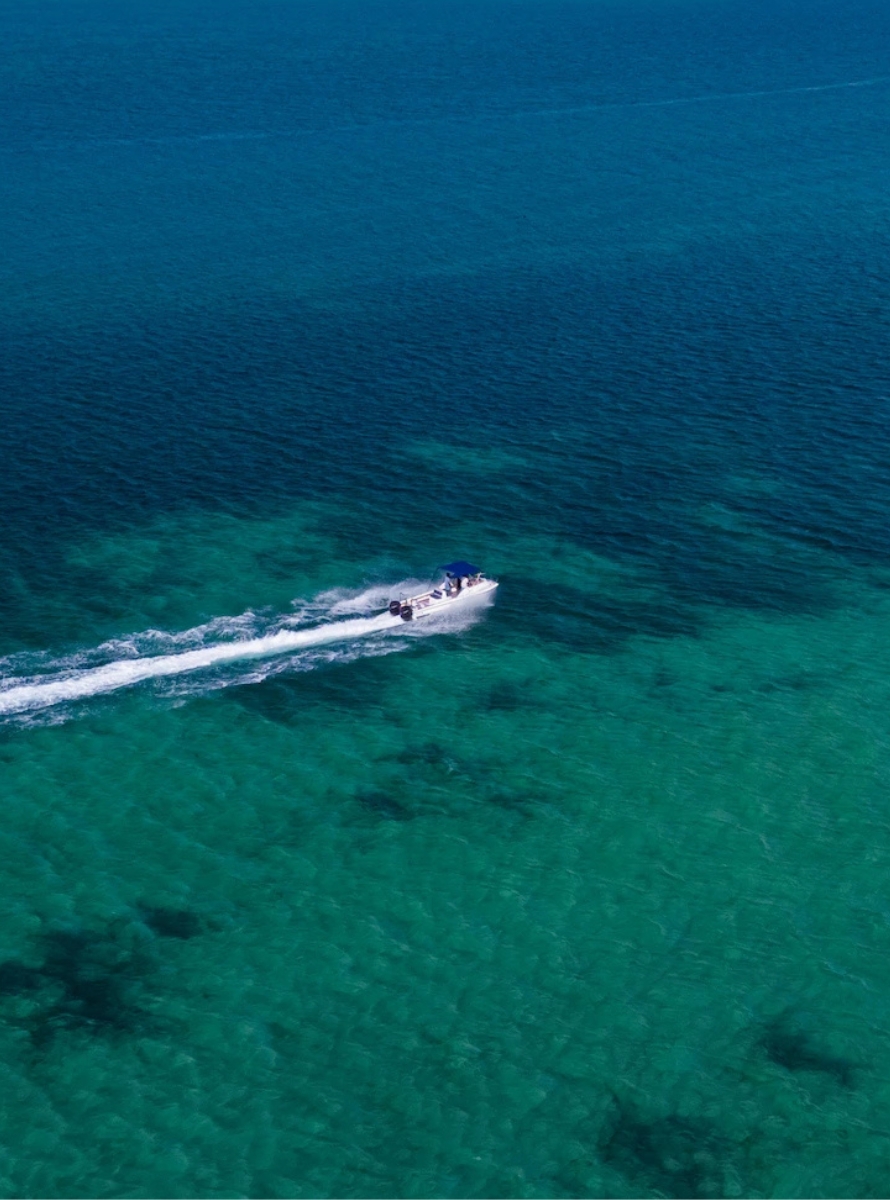
The Bazaruto Archipelago is one of Mozambique’s most recognisable settings. Dunes, sandbanks and shades of blue create a landscape that changes with the tides and the depth of the water.
Off Vilanculos, its national park brings together five islands: Bazaruto, Benguerra, Magaruque, Santa Carolina and Bangué.
Created in 1971, it now protects a marine and island area of 1,583 km².
On Bazaruto Island, the dunes dominate the landscape. Around them, the sea changes colour with the depth and the tides.
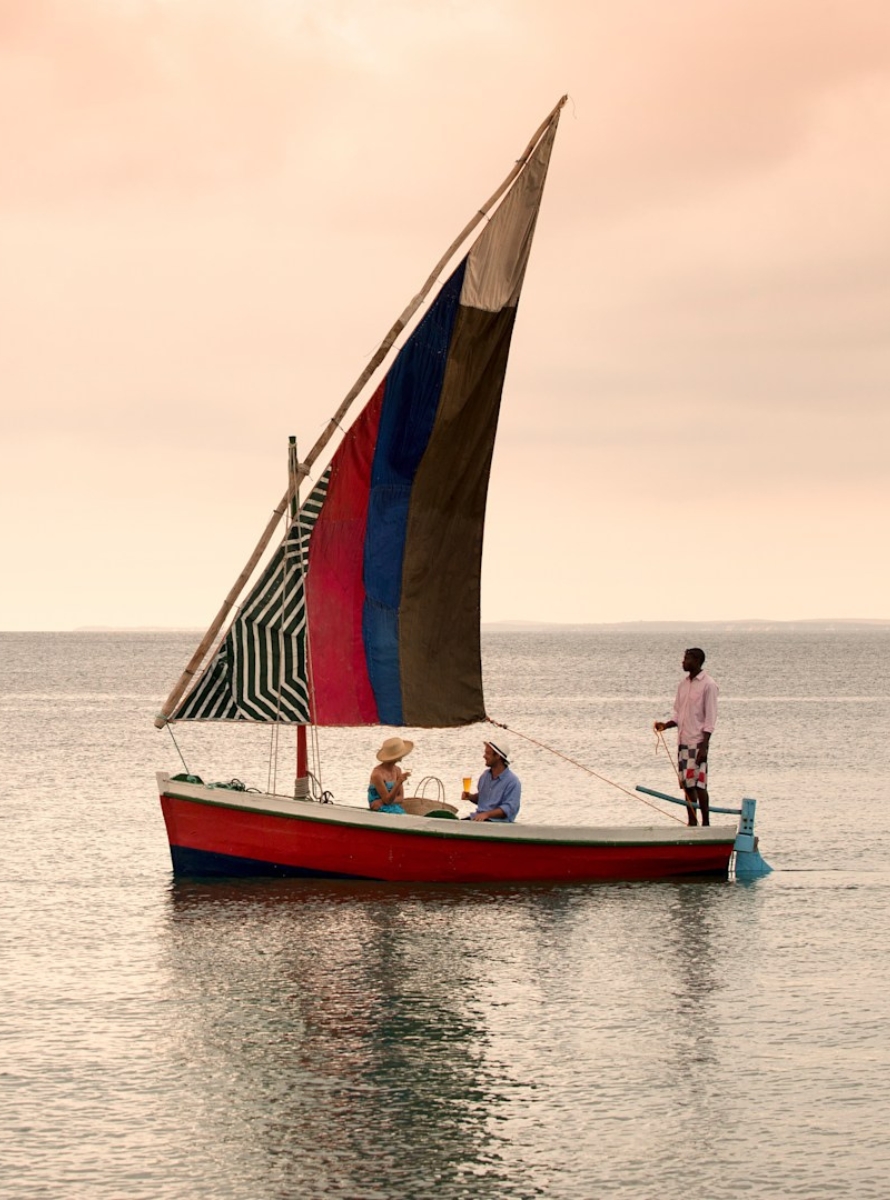
The scenery can also be discovered from the water. Sailing, snorkelling and trips out to sea offer another way of reading the archipelago.
It is a landscape best experienced slowly.
What are the landscapes of Vilanculos like?
Vilanculos offers a bay landscape looking out towards the Bazaruto islands. The tides, the boats and the dhows regularly transform the scenery.
Vilanculos is on the mainland, but the archipelago is never far away.
From the coast, the eye is drawn towards Bazaruto. The Mozambican tourist board also presents Vilanculos as one of the main departure points for water activities and island excursions.
Vilanculos has a different atmosphere from an island stay.
There is more movement and more local life, while you stay focused on the ocean.
What are the landscapes of Tofo like?
Tofo reveals a more open and livelier side of the Mozambican coast. Here, the long beaches face the Indian Ocean head on.
Near Inhambane, Tofo offers another view of Mozambique’s coastline.
The atmosphere is more relaxed and more active than in Bazaruto. Tofo is known in particular for surfing, diving and snorkelling. The national tourist board lists it among Inhambane’s flagship destinations for these activities.
Even if you do not do any water sports, the landscape is well worth the trip.
Here, the ocean sets the pace.
Why discover Ilha de Moçambique?
Ilha de Moçambique combines seascape and historic heritage. The sea, the architecture and several centuries of history can all be discovered in the same place.
In Nampula province, the island lies about four kilometres from the mainland and is linked to it by a bridge.
It has been a UNESCO World Heritage Site since 1991.
Its appeal lies as much in its maritime setting as in its heritage. The stone town, the macuti buildings and the fortifications bear witness to several centuries of exchanges between Bantu, Swahili, Arab, Persian, Indian and European peoples.
Here, the landscape is cultural too.
Which islands to discover in Mozambique?
Mozambique’s islands offer very different experiences depending on their relief, their setting and their atmosphere. In the Bazaruto Archipelago alone, Bazaruto and Benguerra illustrate two different ways of enjoying an island stay.
Bazaruto or Benguerra: which island to choose?
Bazaruto stands out for its wide open spaces and its dunes, while Benguerra particularly suits travellers looking for a few quiet days in upmarket accommodation.
Bazaruto is the largest island in the archipelago. Its dunes give the landscape a sense of space and offer a different vantage point over the coastal environment.
Benguerra has another atmosphere, with direct access to the sea and a stay more focused on tranquillity.
There is therefore little point in trying to decide which island is the most beautiful.
The choice depends rather on how you want to experience the archipelago.
Why must Bazaruto’s landscape be protected?
Bazaruto is not just a postcard backdrop. Its national park protects a marine and island ecosystem that is home to sea turtles and dugongs in particular.
Its waters also shelter coral reefs and seagrass beds.
Dugongs are present, but sightings remain rare and should never be promised.
This richness is a reminder that the scenery is not merely beautiful. The choice of activities and partners must respect this environment.
What is Mozambique’s coastline like?
Mozambique’s coastline changes considerably from region to region. Bazaruto, Vilanculos and Tofo alone are enough to show that it is not a uniform succession of white sand beaches.
Are all of Mozambique’s beaches alike?
No. Bazaruto offers an island landscape shaped by dunes, Vilanculos opens onto a vast bay and Tofo faces the ocean head on.
Elsewhere, the coast gives way to lagoons, mangroves or vegetated dunes.
Visiting several coastal regions therefore does not necessarily mean repeating the same experience.
Where to see mangroves and lagoons in Mozambique?
Mangroves are found in several coastal areas of Mozambique and offer another way of reading the coast. Maputo National Park in particular lets you observe these landscapes where water and vegetation intertwine.
Its environment combines forests on sandy soils, mangroves, marshland and dunes covered in vegetation.
At first glance, these habitats are less spectacular than a turquoise beach.
Yet they reveal another side of nature in Mozambique.
Where to discover Mozambique’s wild nature?
Gorongosa and Maputo National Park reveal a Mozambique very different from the coast. Beaches and islands give way to plains, forests, wetlands and mountains.
Which landscapes can you discover in Gorongosa?
Gorongosa brings together floodplains, grasslands, forests, rivers and mountain habitats. This mosaic of landscapes partly explains the park’s biological richness.
In the centre of the country, Gorongosa is one of the best examples of this diversity.
The park is also known for its vast restoration and conservation programme.
In an itinerary with several coastal stops, a few days here create a real break.
You leave the seaside behind. You find wide open spaces again.
Why discover Mount Gorongosa?
Mount Gorongosa reveals an unexpected mountain landscape in Mozambique. Rising to 1,864 metres, it contrasts sharply with the beaches and plains usually associated with the country.
Its Afromontane forests play an essential role in the water balance of the whole park. They are also home to several endemic species.
The landscape is surprising precisely because it breaks with the usual image of Mozambique.
The country is not made up only of beaches and plains.
Which landscapes does Maputo National Park offer?
Maputo National Park combines sand forests, mangroves, wetlands and vegetated dunes. Its proximity to the ocean creates a particularly interesting transition between wild nature and the coast.
Elephants, zebras, giraffes, hippos and various species of antelope are among the animals found there.
The transition from wilderness to ocean feels almost seamless there.
Can you discover several of Mozambique’s landscapes on one trip?
Yes. Combining the islands, the coast and the interior is even one of the best ways to understand Mozambique’s diversity.
A beach-only stay shows one beautiful side of the country. But combining the islands with the interior gives the trip far more depth.
How to combine islands, beaches and wild nature?
Vilanculos and Bazaruto go naturally together, while Gorongosa introduces a much sharper break with the coastal landscapes. Tofo can then extend the trip in another seaside atmosphere.
The idea is not to add stops so as to see as many places as possible.
A good itinerary picks a few truly different landscapes and leaves enough time to enjoy them.
Why alternate between the coast and the interior?
Alternating between the coast and the interior completely changes the pace and atmosphere of the trip. An early-morning outing in Gorongosa is nothing like a day on a boat in the Bazaruto Archipelago.
After a few days on the plains, returning to the ocean takes on a different flavour.
It is precisely this contrast that gives the trip its personality.
Which tour to choose to discover Mozambique’s landscapes?
Choosing a tour of Mozambique depends first on the time available and the landscapes you want to prioritise. A good itinerary does not try to pile up stops, but to select truly different environments.
Which stops to choose for a first trip to Mozambique?
Vilanculos and Bazaruto form a coherent combination for discovering the sea and the islands. For a trip with more contrast, Gorongosa adds the landscapes of the interior and wildlife.
Tofo, for its part, brings another coastal atmosphere.
The best tour is therefore not necessarily the one with the most stops.
Our guide to touring Mozambique and the stops to prioritise takes this thinking further.
Which itinerary to choose between beaches and nature in Mozambique?
To discover several of Mozambique’s landscapes, it is better to build the trip around strong contrasts than to multiply destinations. Vilanculos, Bazaruto, Gorongosa and Tofo, for example, let you combine bay, islands, wild nature and ocean.
Our beach and nature itinerary in Mozambique brings together exactly these four stops.
The idea is not to rush from one place to the next.
Each stop needs time to breathe.
Discover this beach and nature itinerary.
When to go to enjoy Mozambique’s landscapes?
Mozambique’s landscapes change with the seasons. Broadly, the country has a wet season from October to April and a dry season from April to October, with May to September a particularly favourable time to travel according to the tourist board.
Which season to choose to see a green Mozambique?
The wet season makes the vegetation denser and the inland landscapes greener. It can, however, make travel more difficult in some regions.
In Gorongosa, the park closes from mid-December to the end of March. Some tracks may remain temporarily closed after it reopens.
This period is therefore not suited to every itinerary.
Which period to choose to combine nature and coast?
For a trip including Gorongosa and several coastal stops, the dry season generally makes travelling easier. May to September is often a good starting point.
The exact period should then be refined according to the activities planned.
A trip focused on safari, diving or simply relaxing by the ocean does not meet exactly the same criteria.
How to build a trip around Mozambique’s landscapes?
A successful trip to Mozambique is not built by adding up destinations. You first need to select the contrasts that appeal to you, then take into account distances, transfers and the time each stop requires.
A few days in Bazaruto after Gorongosa. A stop in Vilanculos before moving on to an island. Or a trip focused more on the coast and marine activities.
Distances and transfers count as much as the landscapes.
This is particularly important in Mozambique, where some stops require careful logistical planning.
Our travel designers therefore adapt the itinerary to the season, the pace you want and the environments you wish to prioritise.
You can also discover our tailor-made trips to Mozambique for inspiration.
What are our criteria for selecting accommodation and partners in Mozambique?
We select accommodation and partners according to their location, the quality of the experience, comfort, service and how well they fit with the itinerary. The way they operate in natural environments that are sometimes fragile is also part of our criteria.
Location is essential. A property can be very beautiful but lose its appeal if it requires disproportionate transfers or makes the trip needlessly complicated.
We also look at the atmosphere of the place, its level of comfort and the experiences accessible from the property.
In natural environments, we pay attention to practices relating to wildlife, ecosystems and local communities.
The final choice depends above all on the trip you are looking for. An island stop in Bazaruto does not meet the same expectations as a stay in Vilanculos or a few days in Gorongosa.
Which landscapes to prioritise on a trip to Mozambique?
The choice depends on the experience you are looking for: Bazaruto for island landscapes, Gorongosa for the wide open spaces of the interior, Vilanculos for the bay and Tofo for a coastline open straight onto the ocean.
Starting out facing the waters of Bazaruto. Heading to the plains of Gorongosa. Then returning to the ocean in Tofo a few days later.
It is in these changes of scenery that Mozambique’s landscapes take on their full meaning.
Some travellers will give more room to the islands. Others will prefer to spend several days inland before returning to the coast.
There is no single ideal itinerary.
Would you like to discover several sides of Mozambique? Talk to our travel designers to create a tailor-made itinerary between islands, coast and wild nature.
How was this guide put together?
This guide draws on South African Travellers’ experience in Southern Africa, our first-hand knowledge of itineraries in Mozambique and information from reference organisations. This approach makes it possible to test the realities of a trip (distances, transfers, pace and choice of stops) against the data available on the areas presented.
Our experience means we do not think only in terms of the most beautiful landscapes. We try instead to understand which environments can be combined coherently within the same trip.
What are the reference sources?
The main sources used to document this guide are:
- ANAC (Administração Nacional das Áreas de Conservação), for Mozambique’s national parks and protected areas;
- INATUR / Visit Mozambique, for destinations, activities, the coast and seasonal information;
- UNESCO World Heritage Centre, for Ilha de Moçambique and its heritage;
- Gorongosa National Park / Gorongosa Project, for Gorongosa’s landscapes, ecosystems and restoration programme.
These sources complement our knowledge of the itineraries and the destination. Cross-checking them makes it possible to present Mozambique’s landscapes with documented information, while taking into account what really matters once you are there: the pace of the trip, the distances and the coherence between stops.