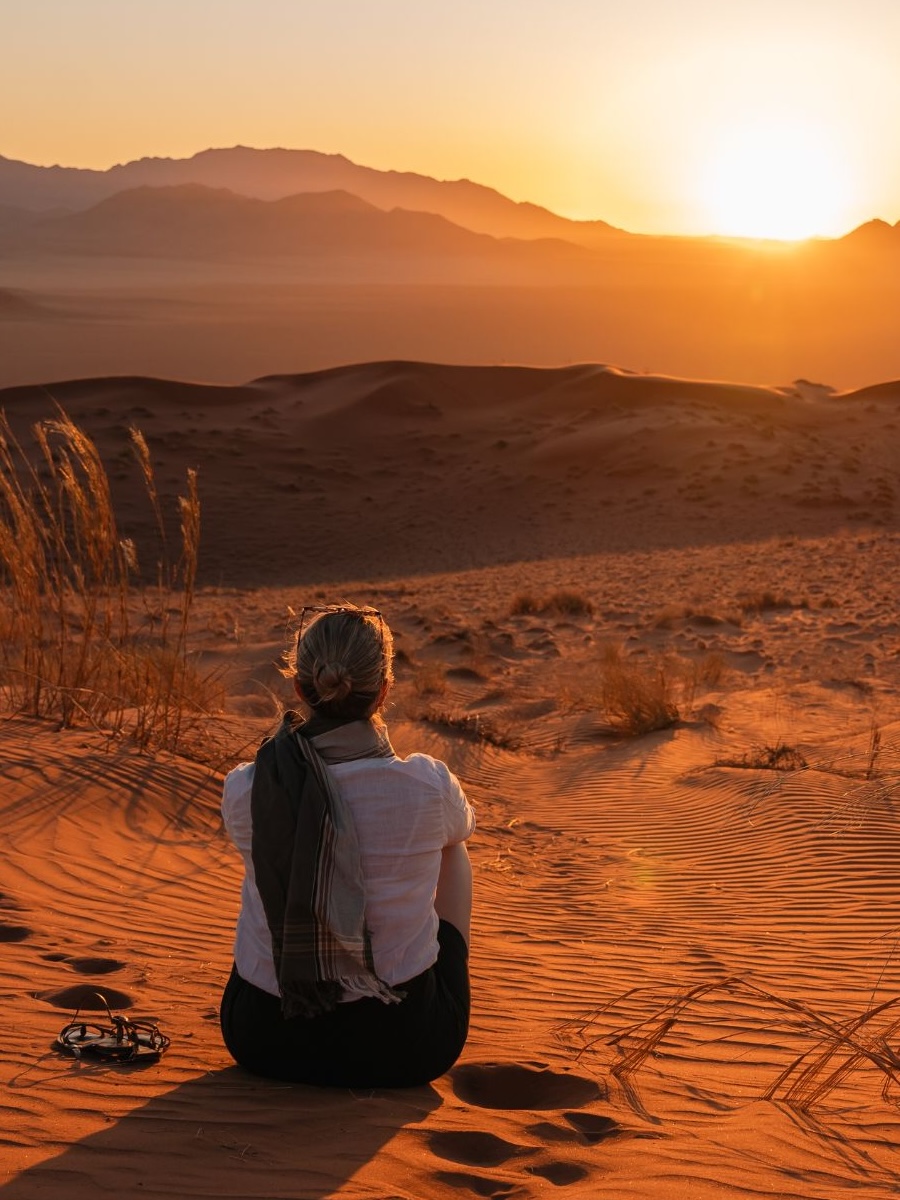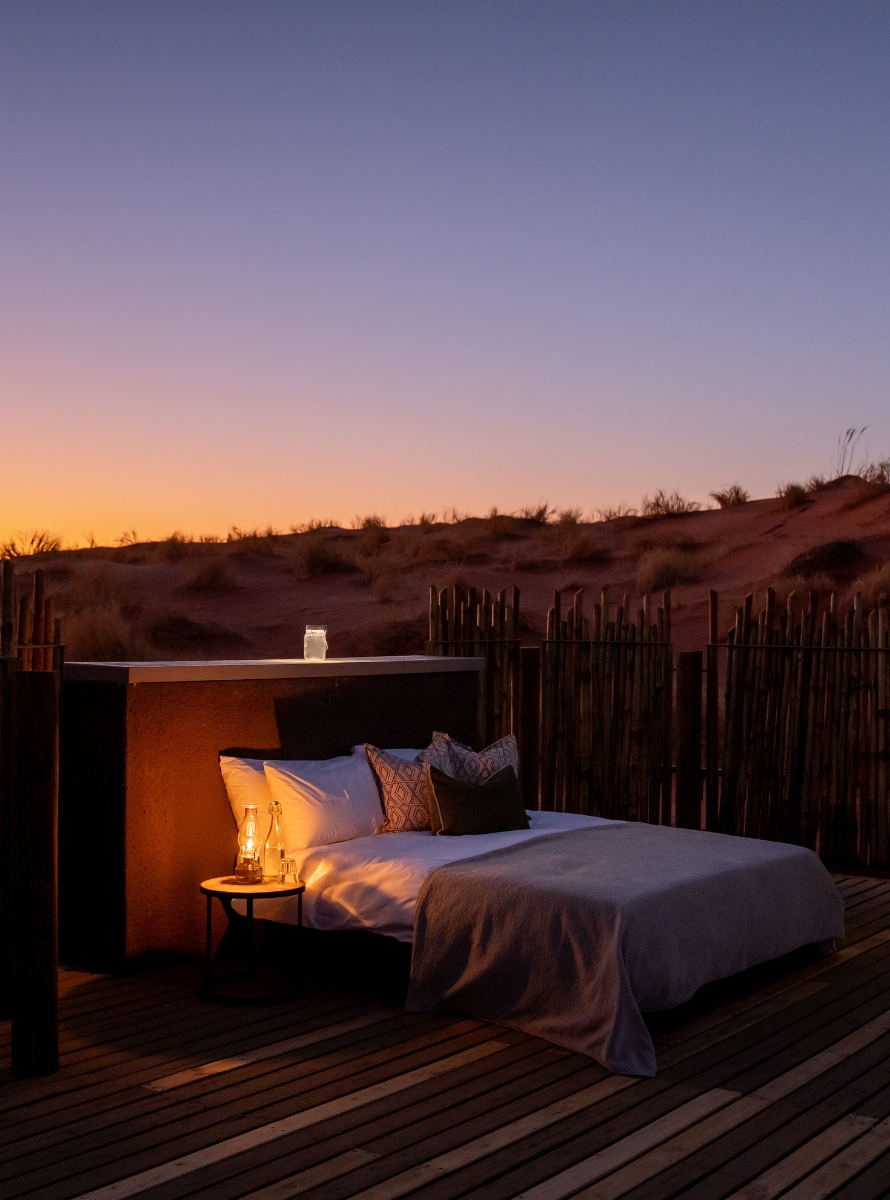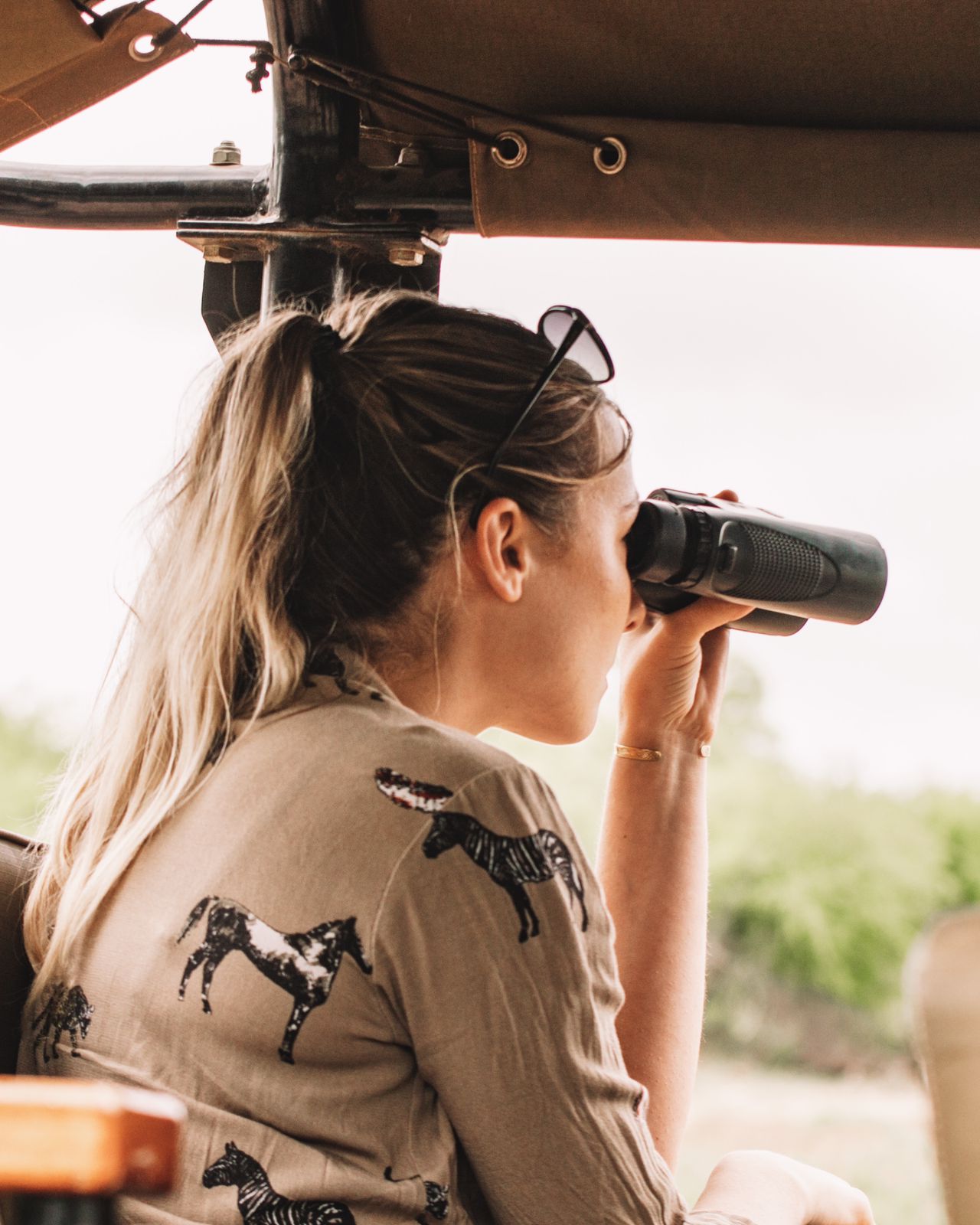
Imagine dawn over a golden plain, a giraffe leaping into the light, the heavy footsteps of an elephant raising white desert dust. Welcome to Etosha National Park, one of Africa’s most iconic wildlife sanctuaries. Located in northern Namibia, this wild gem captivates with its abundant wildlife, lunar landscapes and almost mystical atmosphere. At South African Travellers, we guide our travellers as close as possible to the wildlife, in exceptional lodges, to experience the thrill of a Namibian safari in all its splendour.
Etosha, “the great white land”
A unique mineral landscape
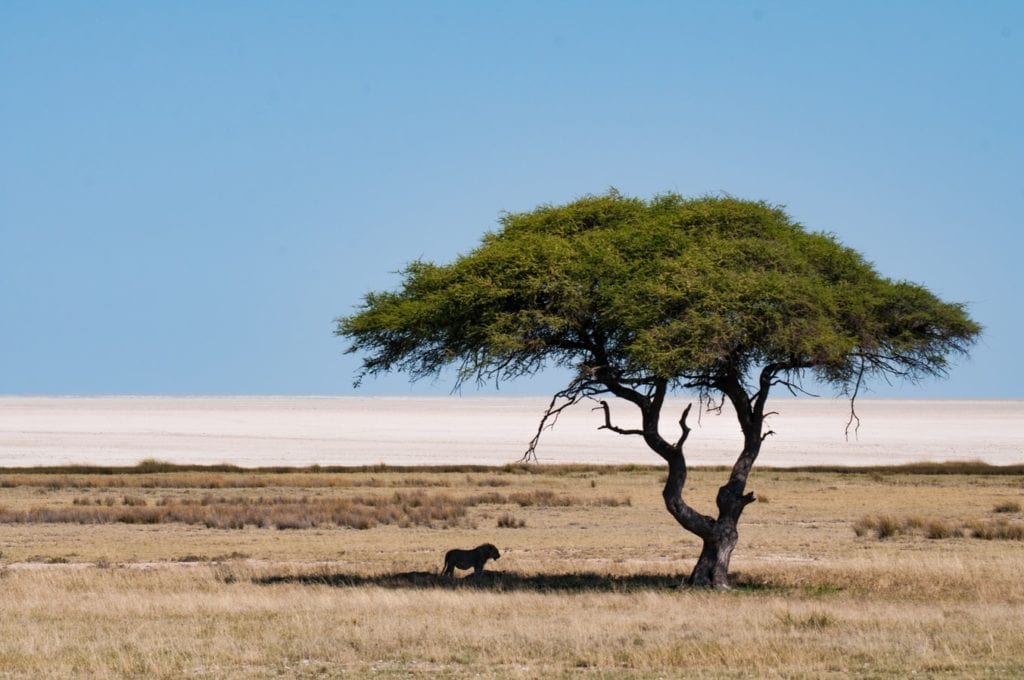
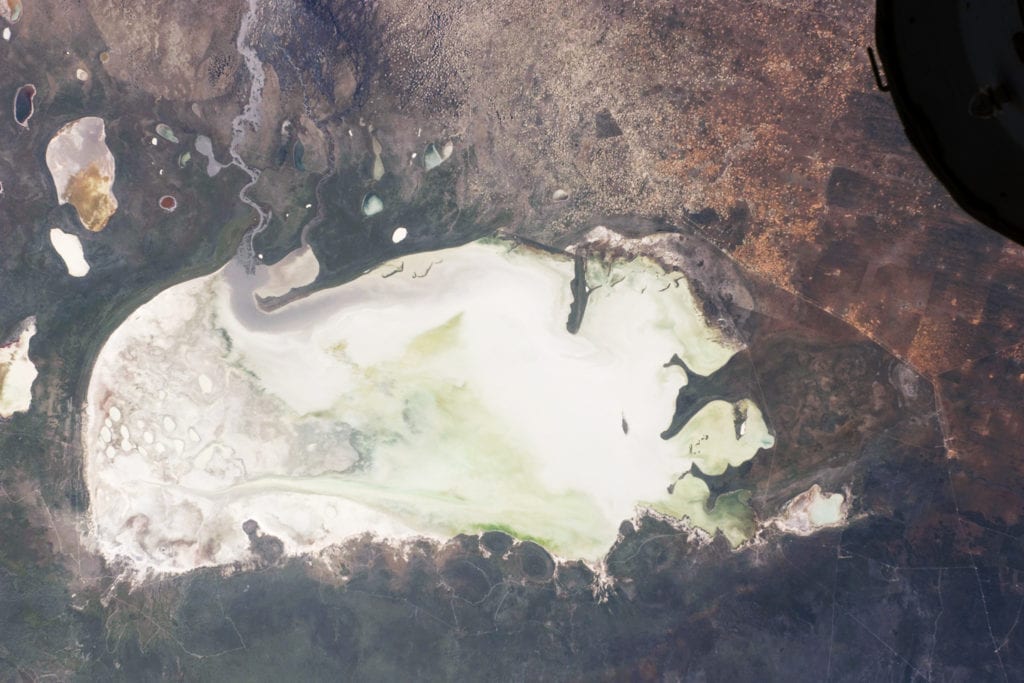
Etosha National Park covers approximately 22,300 km² in the heart of northern Namibia. Its name, Etosha, means “the great place of dry water” in the Oshivambo language. At the centre of the park stretches the majestic Etosha Pan, a dried salt lake of nearly 4,800 km², almost a quarter of the park’s total area. Visible from space, this white, shimmering expanse transforms into an ephemeral water mirror during the wet season, attracting thousands of flamingos and wading birds. Around it, forests of acacias and mopanes contrast with the salt, creating a picture of austere and hypnotic beauty.
A legendary reserve in southern Africa
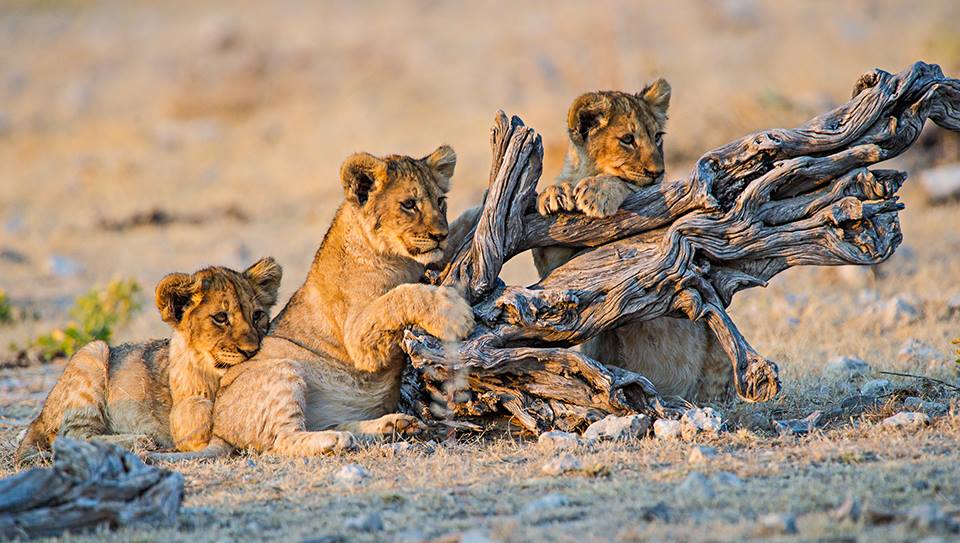
Established in 1907, Etosha is today one of the continent’s finest wildlife parks. It is home to approximately 114 mammal species, 340 bird species, 110 reptiles, 16 amphibians and one fish species present only during floods. The Big Four (elephants, lions, leopards, black rhinos) reign supreme here — buffalos, hippos and crocodiles are absent due to lack of permanent water. The waterholes, scattered throughout the park, become the true theatres of wildlife: at dusk, the savanna gathers there in a silent ballet of elephants, zebras, giraffes and antelopes. Discover South African Travellers’ expertise in Big Five safaris.
Safari in Etosha: an immersion in wildlife
When to visit? The park’s seasons
The dry season, from May to October, offers ideal conditions: sparse vegetation, wildlife concentrated around waterholes, golden light. It’s the perfect period for photographers and travellers seeking raw emotions. The rainy season, from November to April, reveals a completely different face: green landscapes, migratory birds, flamingos and pastel sunsets. For birdwatching enthusiasts, the surroundings of Namutoni Fort are then a true paradise.


Essential areas of Etosha National Park
Each area of Etosha tells a story:
Okaukuejo, in the south, famous for its floodlit waterhole at night where elephants and black rhinos meet in striking silence.
Halali, in the centre of the park, offers a peaceful atmosphere and sublime sunsets.
Namutoni, in the east, a former German fort and bird sanctuary.
Dolomite Camp, in the west, more exclusive, ideal for those seeking tranquillity and private observation.
Park entrance gates
Four gates provide access to Etosha:
Andersson Gate, in the south (from Outjo and Okaukuejo).
Von Lindequist Gate, in the east (towards Tsumeb and Namutoni).
King Nehale Lya Mpingana Gate, in the north.
Galton Gate, in the west, the most isolated.
The choice of gate depends on your itinerary and safari style.
How to experience Etosha with South African Travellers
Choose your safari style
Etosha can be discovered at your own pace:
Self-drive for lovers of autonomy and wide-open spaces.
Private guided safari to benefit from the expert eye of a ranger and superior comfort.
Fly-in safari to connect lodges and Namib dunes aboard a small private plane. Discover our Luxury Namibia Safari itinerary.


Exceptional lodges and camps
Inside the park, public camps allow you to experience nature up close, while outside, lodges offer a premium experience. At South African Travellers, each property is selected for its refinement, authenticity and environmental commitment. For a complete journey, discover Lands of Namibia: Exclusive 20-day itinerary.
Expert tips for a successful Etosha safari
Observe, listen, immerse yourself
The best observation hours are sunrise and sunset. At Okaukuejo, the floodlit waterhole at night regularly attracts black rhinos and elephants — a unique spectacle.
Pack your safari bag with style
In Namibia, the light is bright and dust is omnipresent: favour light-coloured cotton clothing, a hat, binoculars and a good camera.
2025 Update: In September 2025, a significant fire affected part of Etosha National Park. Namibian authorities quickly brought the situation under control and the park remains open to visitors. Wildlife was not affected and tourist facilities remain operational.
Going further
Discover the 4 best safaris with your children, our complete Namibia safari guide, or experience the poetic thrill of a hot air balloon flight over the Namib Desert.
In conclusion: Etosha, Namibia in all its splendour
Etosha National Park is a world apart: a territory of silence, light and freedom. It’s one of those rare places where nature asserts itself effortlessly. Contact South African Travellers to design your tailor-made Namibian itinerary.