In South Africa, adventure doesn’t end on the savannah. Between the Indian Ocean and the Atlantic, the country reveals another side of its wild nature: the underwater world. Here, safaris happen beneath the waves too, among sharks, whales and coral reefs. From the tropical waters of Sodwana Bay to the kelp forests of the Cape, every dive tells a story. Discover the finest diving sites in South Africa — a vibrant, unexpected underwater world.
Why dive in South Africa? A country between two oceans
Ecosystems unlike anywhere else
South Africa is flanked by two very different seas: the cold, fish-rich Atlantic and the warm, tropical Indian Ocean. This contrast makes its coastline one of the most biodiverse marine zones on the continent. Colourful corals, towering kelp forests, dramatic shipwrecks and endless shoals of sardines offer an extraordinary playground for divers. Each descent reveals a new surprise — a graceful dance of rays, turtles or tropical fish.
The Marine Big Five: an ocean safari
After the lions and elephants of the bush, meet the Marine Big Five: the shark, the whale, the dolphin, the seal and the penguin. This “ocean safari” captures the very essence of diving in South Africa — close encounters with wild, free-roaming creatures against a shifting, awe-inspiring backdrop.
The best diving spots in South Africa
Sodwana Bay: tropical reefs and whale sharks
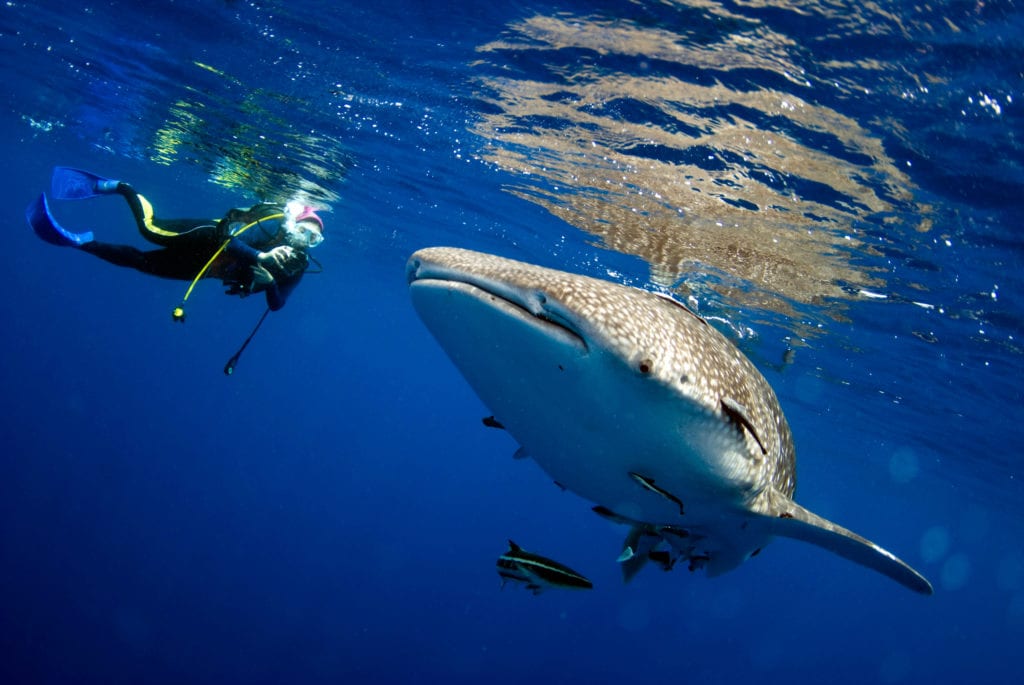
In northern KwaZulu-Natal, Sodwana Bay is a marine gem within a UNESCO World Heritage Site. Between October and May, its turquoise waters welcome whale sharks, manta rays and humpback whales. The reefs teem with life, from corals to parrotfish. It’s an ideal stop to include in a South Africa highlights itinerary, blending adventure with pure wonder.
Aliwal Shoal: the kingdom of ragged-tooth sharks
Just an hour from Durban, Aliwal Shoal ranks among the top ten dive sites in South Africa. Each year between June and November, ragged-tooth sharks gather here in a mesmerising display. Divers also explore the legendary wrecks of the Produce and the Nebo, now refuges for colourful reef fish. A dive at Aliwal is a face-to-face encounter with the raw power of the ocean.
Protea Banks: pure adrenaline
Further south, Protea Banks draws thrill-seekers from around the world. Strong currents, caves, schools of bull sharks and tiger sharks — every descent is an adrenaline rush. This site is best suited to experienced divers. Afterwards, balance the intensity with a honeymoon experience for a gentler interlude on the Indian Ocean coast.

False Bay: shipwrecks and kelp forests
On Cape Town’s doorstep, False Bay offers a completely different atmosphere. Dives unfold through majestic kelp forests where seals, rays and schools of anchovies glide past. The cooler water reveals a crystalline light that turns every descent into a visual spectacle. You can also snorkel with seals and penguins in a landscape that feels like the edge of the world.
Diving with the Great White Shark: Gansbaai and Dyer Island
A unique experience, between fascination and respect
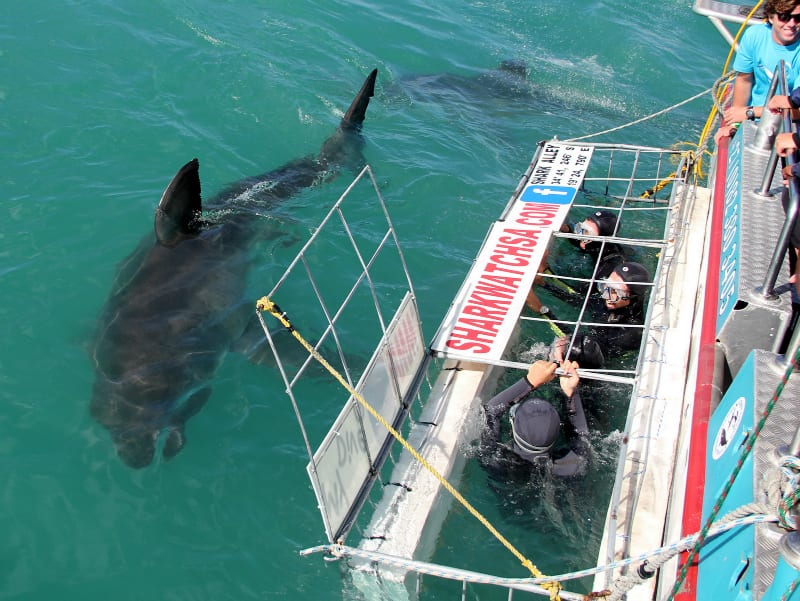
Two and a half hours from Cape Town, Gansbaai is the great white shark capital of the world. The experience, aboard an observation boat, blends raw emotion with deep respect. At South African Travellers, we work exclusively with responsible operators whose philosophy is simple: observe without disturbing. From the harbour, you set out at dawn towards Dyer Island. Then comes the stillness, the anticipation — and suddenly, that massive silhouette gliding between two waters. A suspended moment, etched into the memory of every traveller.
The Sardine Run: the ocean’s greatest spectacle
A legendary migration
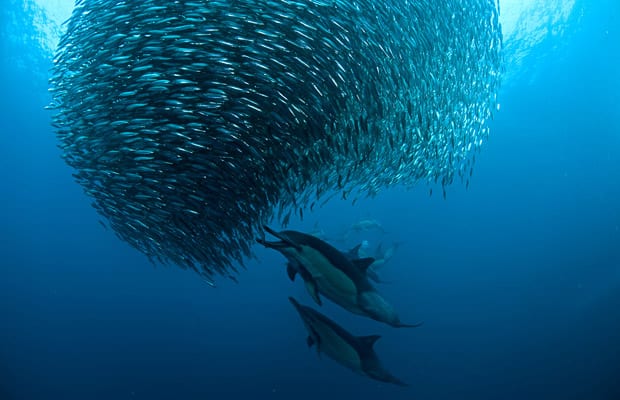
Every austral winter, between May and July, millions of sardines travel along South Africa’s east coast. Around them, the sea comes alive: dolphins, sharks, tuna and whales join this natural feast. Known as the “great blue migration”, it is one of the most spectacular marine events on the planet.
Where and when to witness the Sardine Run
The best observation points are around Port St Johns and Coffee Bay. Experienced divers enjoy intense underwater encounters, while other travellers can board observation boats to watch the spectacle from the surface.
Practical tips for a successful dive trip in South Africa
When to go
- Indian Ocean (KwaZulu-Natal): October to May for whale sharks and warm waters.
- Atlantic Ocean (Cape Town and Gansbaai): May to September for whales and sharks.
Safety and guidance
Always dive with certified operators who respect the marine environment. Equipment is provided on site, but a PADI or CMAS certificate is recommended for deep dives. With South African Travellers, you benefit from trusted guidance and hand-picked partners, so you can enjoy every dive with complete peace of mind.
Combining diving and safari: the perfect pairing
After your underwater adventures, extend the journey on dry land. Combine your explorations with a South Africa highlights itinerary or a romance with Mozambique. From the tropical reefs of Sodwana to the plains of the Kruger, southern Africa offers a perfect contrast between immersion and contemplation.
Further reading: nature, beaches and marine life
Continue your marine exploration with our travel guides:
- Whales in Hermanus: the unmissable rendezvous with the giants of the ocean on the southern coast.
- The best beaches in South Africa: from Hermanus to the KwaZulu-Natal coast, let the beauty of South Africa’s shores carry you away.
Diving in South Africa: an unforgettable experience
From the tropical reefs of Sodwana to the kelp forests of False Bay, every dive is a sensory experience — a face-to-face encounter with the raw beauty of the marine world. Here, the sea becomes a safari ground in its own right: vibrant, unpredictable and utterly unforgettable.
Contact South African Travellers to design your tailor-made itinerary, combining wild beaches, safaris and exceptional aquatic adventures.