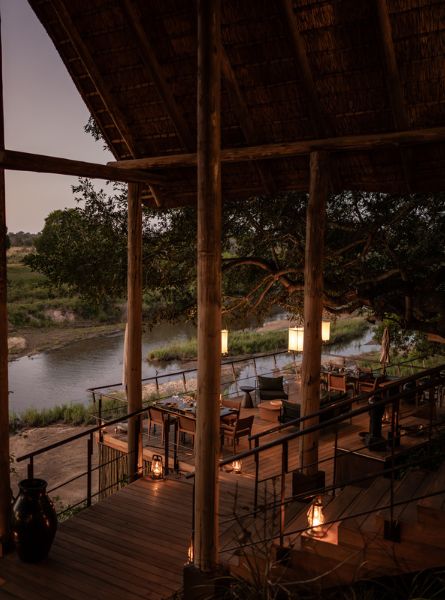
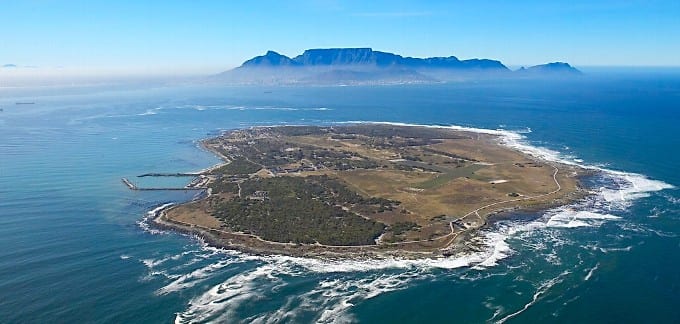
Just a short ferry ride from Cape Town, a windswept island stands as the ultimate symbol of the struggle for freedom. Robben Island is not merely an excursion: it is a visit to Mandela’s prison, a journey into the collective memory of South Africa.
At South African Travellers, we recommend this experience to anyone who wishes to understand the depth of the country, beyond its landscapes. It is a deeply moving crossing, an immersion into the story of one man and an entire nation.
Robben Island, a place steeped in history
From exile to penal colony: five centuries of a troubled past
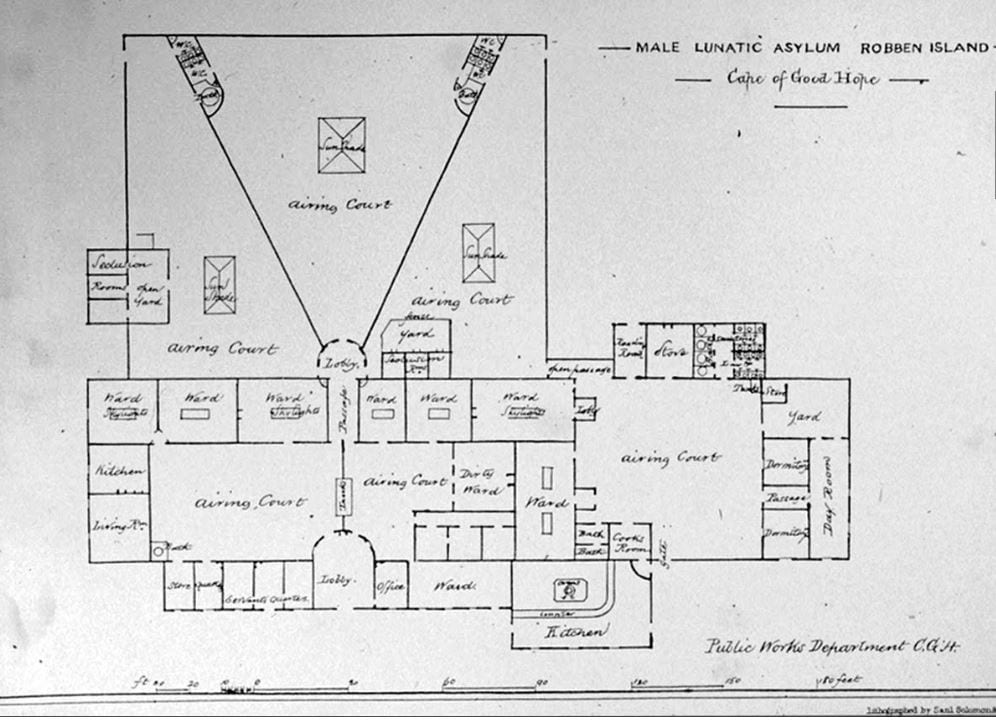
Long before Mandela was imprisoned there, Robben Island served successively as a place of exile, a hospital and a fortress. From the 17th century onwards, Dutch colonists confined local chiefs and political opponents on the island. Later, it housed a psychiatric asylum and then a leper hospital. During the Second World War, the South African military installed defensive batteries to protect Cape Town’s bay.
It was in 1961 that Robben Island became a maximum-security prison, intended for opponents of Apartheid.

Nelson Mandela, eighteen years of hardship and hope
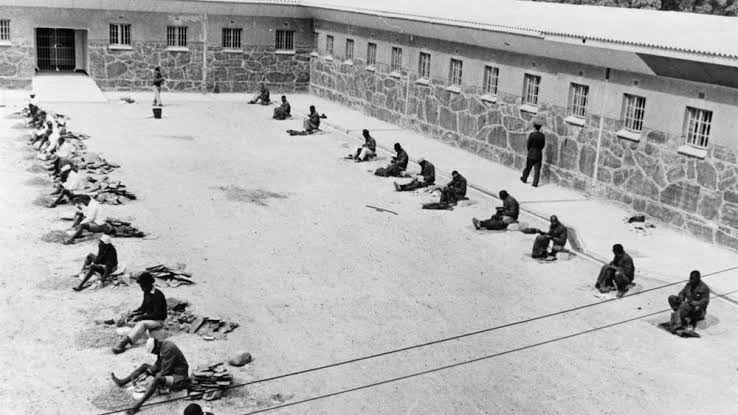
Sentenced to life imprisonment in 1964, Nelson Mandela was transferred to Robben Island where he spent nearly 18 years behind bars. His cell, austere and tiny, has become a worldwide symbol of resilience. Days followed one another to the rhythm of hard labour in the limestone quarry, beneath a scorching sun. Despite the harshness, he continued his law studies, taught, learnt Afrikaans and transformed the prison into a veritable clandestine university.
Today, this visit to Mandela’s prison remains one of the most powerful moments of a trip to Cape Town: a place where history comes alive, between sorrow and greatness.
Planning your visit to Robben Island from Cape Town
Ferry crossing: a symbolic departure
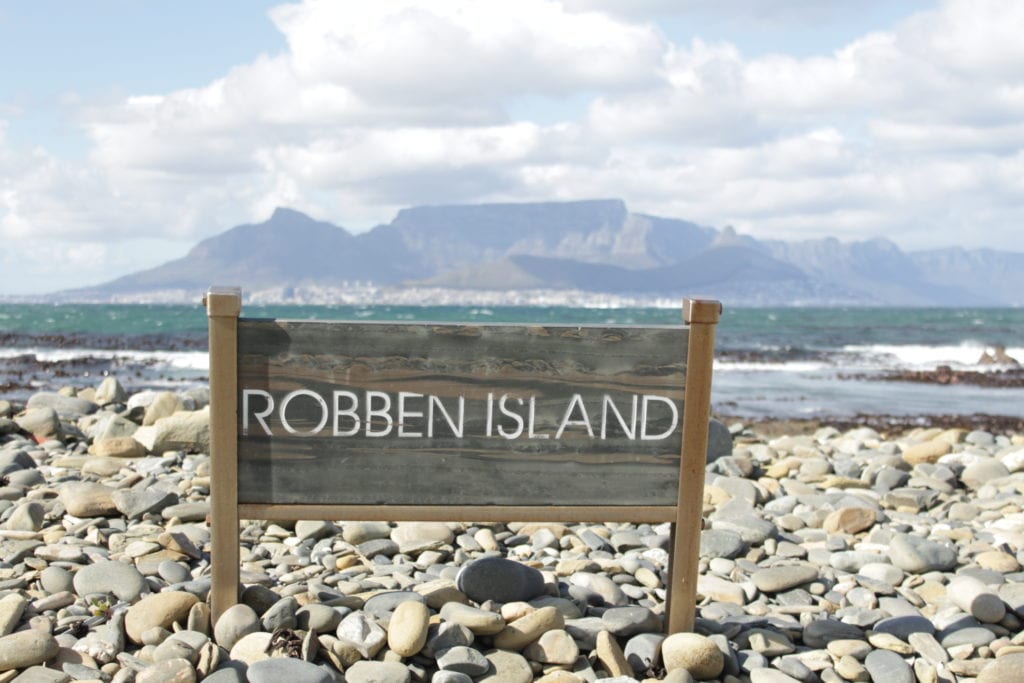
The experience begins at the Nelson Mandela Gateway, at the V&A Waterfront. The ferry leaves the harbour for a crossing of 30 to 45 minutes. The wind, the sea, the silhouette of Table Mountain growing distant: every detail makes this visit to Robben Island truly singular. It is an almost meditative approach, a passage between two worlds: that of freedom and that of remembrance.
To extend this discovery, explore our South Africa Highlights itinerary, ideal for combining culture and wide-open spaces around Cape Town.
The guided tour: emotions and testimonies
On the island, the visit unfolds in two parts: a panoramic bus tour of the island, followed by the discovery of the detention block. A former prisoner shares his story; his voice, imbued with emotion, plunges visitors into the reality of the Apartheid years.
Before cell 466/64 of Mandela, silence falls completely. The walls still seem inhabited by the presence of the man who became the father of the nation. This visit to Mandela’s prison moves, inspires and awakens in each visitor an awareness of what freedom truly means.

Practical information and premium tips
The complete visit lasts approximately 3.5 to 4 hours, including the crossing. Departures take place several times a day: generally at 9 am, 11 am, 1 pm and 3 pm (weather permitting). Tours are conducted in English, and the testimony of the guides transcends words.
Remember to book your tickets several days in advance and to bring clothing suited to the offshore wind.
The living legacy of Mandela
What you feel on site
Visitors speak of a sense of humility. Footsteps echo through the corridors, the light of the Cape filters through the bars, the salty air stings the skin ever so slightly: everything seems suspended between yesterday and today. It is a silent yet profoundly eloquent experience. The visit to Mandela’s prison is an encounter with the living memory of the country.
Robben Island today, a universal memory
Since 1999, the island has been a UNESCO World Heritage Site. It houses a national museum dedicated to the anti-apartheid struggle and welcomes thousands of visitors each year, both South African and international, who come to understand the path towards reconciliation.
Based in Cape Town, South African Travellers includes this excursion in its tailor-made journeys, alongside the great highlights of the region: Table Mountain, Cape Point and the Cape Winelands.
Completing your stay in Cape Town
After this history-laden visit, make way for the natural beauty of Cape Town: the panorama of Table Mountain, the cliffs of the Cape of Good Hope, the colourful streets of Bo-Kaap, or the beaches of Clifton. These discoveries fit perfectly into our South Africa Family Trip itinerary, designed to blend culture, nature and shared moments.
Conclusion: in the footsteps of one man and a nation
Visiting Mandela’s prison is not simply a tourist stop. It is a transformative experience, a lesson in humanity. Walking in Mandela’s footsteps means feeling the power of forgiveness and the quiet strength of a man who turned suffering into hope.
Contact South African Travellers to plan your stay in Cape Town and live this unique experience, accompanied by passionate experts rooted locally.
Further reading
Discover the cultural richness of Cape Town through two iconic travel guides:
- Zeitz MOCAA, contemporary art in the heart of Cape Town: an architectural masterpiece and a vibrant tribute to African creativity
- The must-visit museums of Cape Town: a refined selection to explore the city’s major cultural institutions